
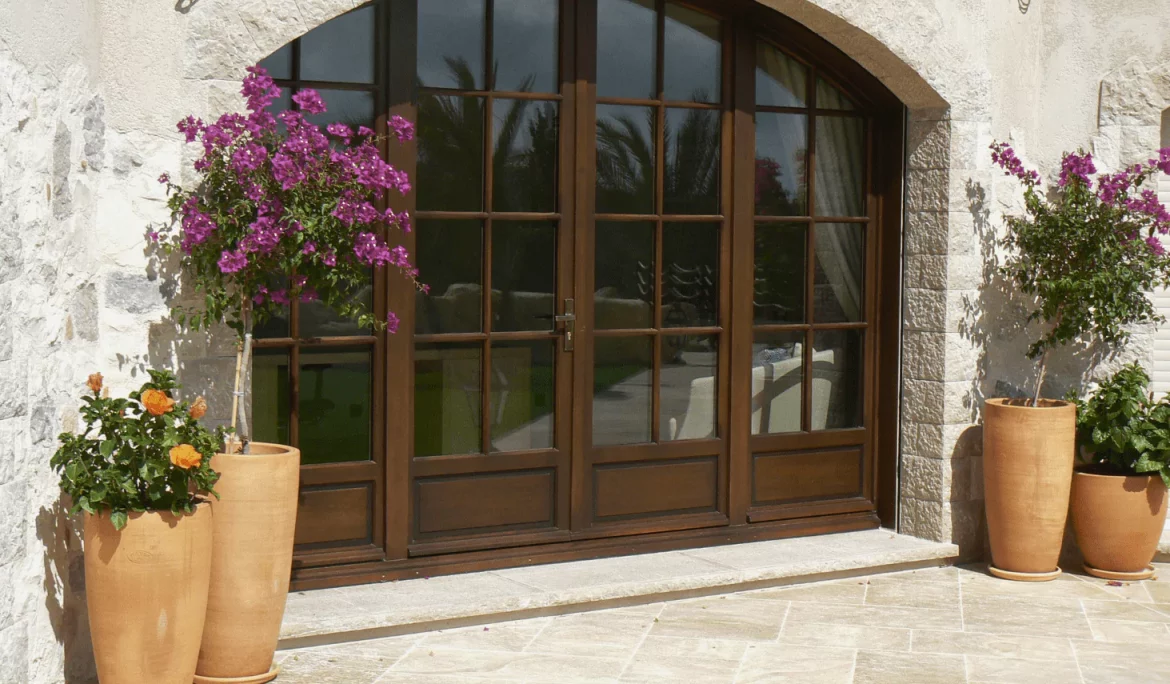
Over time, a French door can start to show signs of wear, especially when it is exposed to the changing climate of the South of France. One of the most common problems faced by homeowners and businesses alike is a door that no longer closes properly. It sticks, rubs or simply refuses to lock.
Beyond the inconvenience, a French door that no longer closes properly can quickly compromise thermal insulation, the security of your home and weatherproofing. This is often the point at which people consider drastic solutions… unnecessarily.
The good news: in most cases, these problems can be fixed with a few simple adjustments, without having to replace the whole unit.
Identify the cause of the problem
Before attempting a repair, it is essential to pinpoint the exact cause of the problem. A French door that won’t close can point to several types of fault, often linked to normal wear and tear or to local weather conditions (heat, humidity, coastal winds).
Symptoms to look out for
Here are the most common warning signs:
- The handle spins freely or is stuck, a sign that the internal locking mechanism is no longer connected to the system.
- The door leaf rubs at the top or bottom, preventing it from closing smoothly.
- The locking bolt no longer engages with the strike plate, making it impossible to lock the door securely.
- A feeling of play or misalignment when you open or close the door, indicating that it may be sagging or out of alignment.
Common causes
Once you have identified the symptoms, it is important to understand the causes. The most frequent include:
- A misaligned door leaf or warped frame, often caused by the gradual sagging of load-bearing parts.
- Loose hinges, which allow the door to develop play over time.
- A dirty or damaged locking mechanism, which can stop the bolt from engaging or the espagnolette from working properly.
- Swollen timber, especially in high humidity or strong sun, which is common on south-facing façades or those exposed to sea winds.
- Factory settings that have drifted, particularly the adjustment screws, which sometimes need re-tensioning or precise repositioning.
Check the overall condition of the French door
Before carrying out any work, a visual and mechanical inspection of the whole French door will pinpoint the problem areas. This step is essential to avoid unnecessary repairs and focus on the right adjustments.
Inspect the hinges
Start by looking at the hinges that support the door leaf. Excessive play, an unusual metallic noise or visible sagging may indicate that the fixings are loose or worn. On recent PVC models, the adjustment screws are often built into the hinges for easy adjustment.
Check the locking mechanism
Secure closing depends on the proper working of the espagnolette (multi-point locking bar), the locking cams and the strike plates. Turn the handle slowly to check that everything engages without excessive resistance. If you feel a stiff spot, a blockage or uneven movement, the mechanism may be dirty or slightly out of adjustment.
Look for rubbing against the frame
Open and close the French door several times while watching the frame (the fixed part). Any visible rubbing, usually at the top or bottom, means the door leaf is out of alignment. This common symptom can have several causes (sagging, swelling, loose screws) and can often be fixed with a simple adjustment.
Make simple adjustments according to the material
Once you have identified the problem areas, some adjustments can easily be made with standard tools. Here are the basic adjustments depending on what your French door is made of.
For a PVC French door
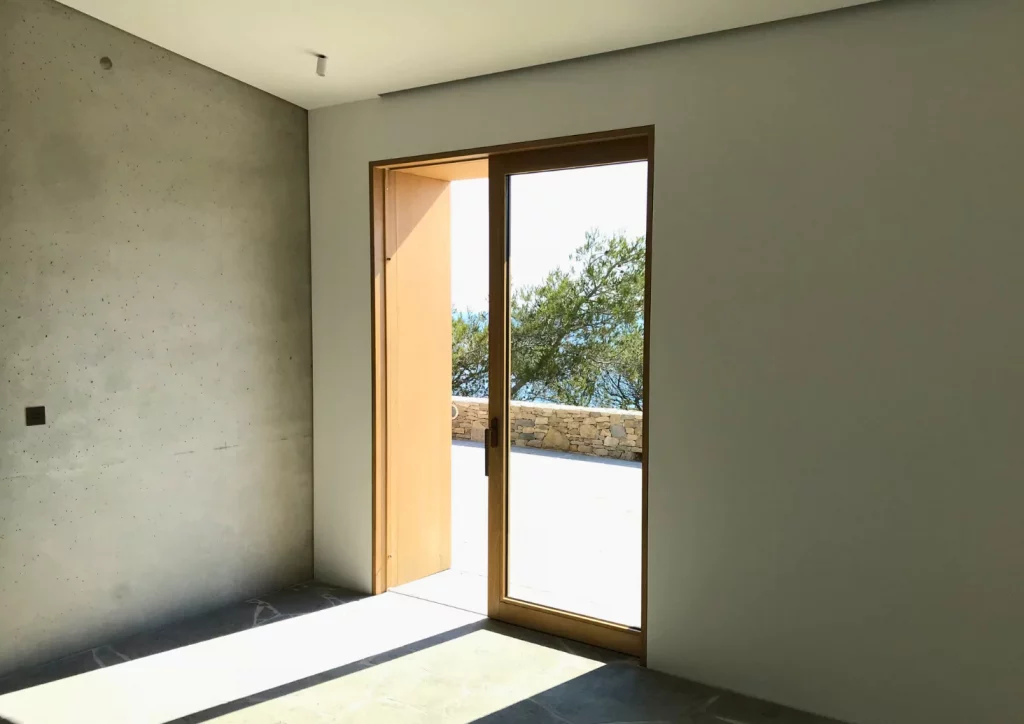
PVC models are designed to be easy to maintain and adjust. To explore the options available, take a look at our custom-made sliding windows and doors, ideal for modern openings onto the outdoors.
Height adjustment
On the bottom hinge, an adjustment screw lets you correct slight sagging of the door leaf. By turning this screw with an Allen key, you can raise or lower the door by a few millimetres, preventing it from rubbing on the floor or the top of the frame.
Closing pressure adjustment
The eccentric locking cams on the edge of the door can be adjusted to optimise the pressure applied when it closes.
- Turn them clockwise to increase the pressure: useful in winter or if there is a draught.
- Turn them anticlockwise to reduce it: handy for smooth everyday use.
Lateral adjustment
Another screw, usually on the hinge, allows the door leaf to be shifted horizontally to the left or right. This adjustment is particularly useful for correcting slight misalignment with the frame.
For a timber French door
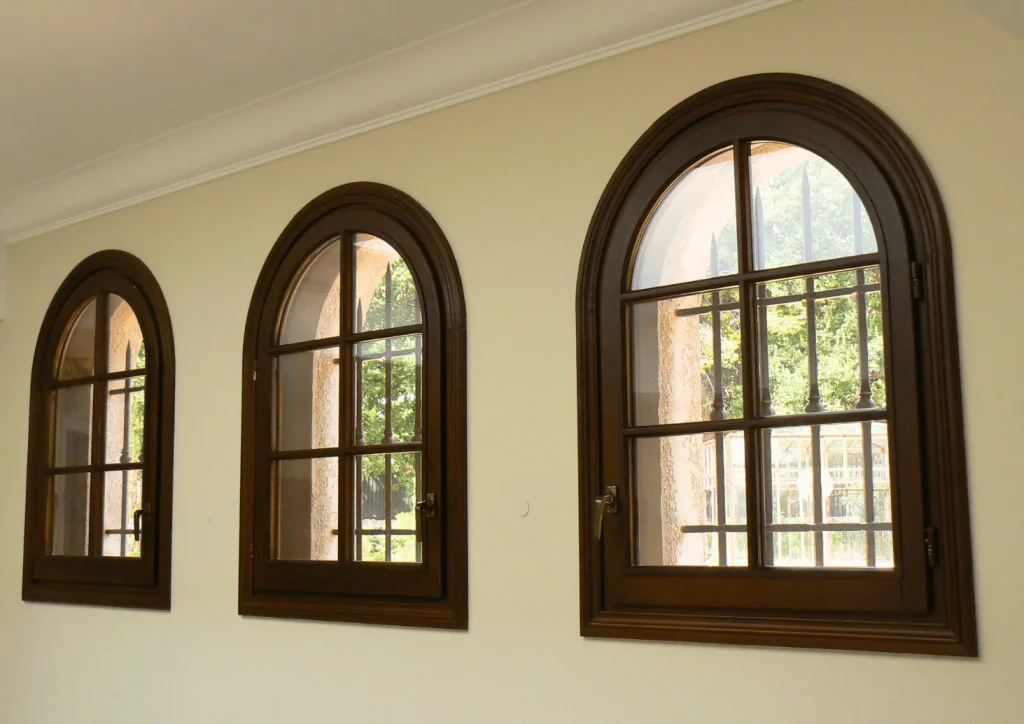
Timber French doors with inward-opening or tilt-and-turn sashes combine traditional charm with thermal efficiency. They are easy to adjust if they start rubbing because of humidity or normal wear.
Plane down the rubbing area
If the timber has swollen, lightly planing the contact areas (usually at the bottom of the door leaf) may be enough to restore smooth closing. Ideally, do this in dry weather to avoid temporary expansion of the wood.
Tighten or replace the hinge screws
If the hinges have play despite good alignment, you may need to tighten the existing screws. In some cases, replacing them with longer or slightly thicker screws gives a better grip in the timber.
Clean and lubricate the mechanisms
A French door can seem faulty when all it really needs is some mechanical maintenance. Regularly cleaning the moving parts is essential not only for smooth operation, but also to extend the life of your installation.
Clean the espagnolette and use the right lubricant
The espagnolette, which locks the door at several points, can become clogged over time (dust, humidity, metal particles). We recommend that you:
- Gently clean the visible parts with a soft cloth and a non-abrasive product.
- Then apply a dry or silicone spray lubricant designed for window and door hardware. Avoid thick greases, which attract dust.
This simple step makes the handle easier to turn and reduces premature wear of the locking system.
Check and replace the seals
The perimeter seals play a crucial role in keeping out air and water. Over time, they can harden, come unstuck or lose their elasticity.
- Check that they are firmly attached to the frame and show no cracks or flattened areas.
- Replace them if necessary: compatible EPDM or high-density foam seals are available for all materials (PVC, timber, aluminium).
Realign the strike plate
The strike plate is often overlooked, yet it is one of the key elements in locking a French door properly. If the bolt (the moving part that comes out of the espagnolette) no longer engages correctly in the strike plate, the door will never lock properly.
Check its position
Start by checking that the strike plate is still aligned with the bolt when you close the door. Over time, or because of slight movements in the frame, an offset of just a few millimetres can be enough to stop the door from closing.
Also make sure it is firmly fixed: loose screws can create enough play to throw everything out of line.
Refix, reposition or file the strike plate if necessary
Three simple options, depending on the situation:
- Refix: tighten the existing screws if the strike plate moves.
- Reposition: drill new holes to move the strike plate slightly higher, lower or further back, as required.
- File: if the offset is minimal, a few strokes of a file on the metal part may be enough to help the bolt engage, without compromising security.
Tip: mark the contact area between the bolt and the strike plate with a pencil to see exactly where it catches before you start.
Special case: tilt-and-turn French doors
Custom-made tilt-and-turn systems offer a clever combination of opening and ventilation. When properly adjusted, they operate smoothly and securely for years.
Position the handle correctly before any adjustment
Before making any adjustment, the handle must be perfectly aligned in its starting position (usually pointing straight down). A handle in the wrong position can not only distort the settings but also disengage the internal mechanism or even jam it.
Mishandling this type of opening can cause lasting damage to the system.
Adjust the specific screws on the top hinge
One of the sensitive areas of a tilt-and-turn door is the top hinge, which tends to sag slightly over time. To correct this:
- Locate the adjustment screws on the hinge (usually accessible when the door is opened in turn mode).
- Using an Allen key, make small vertical or lateral adjustments.
- Check that the door tilts smoothly and closes properly after each adjustment.
A successful adjustment results in soft closing, smooth movement and a handle that turns without resistance.
When should you call a professional?
If, despite all these checks, cleaning and adjustments, your French door still refuses to work properly, it is time to consider a more thorough repair.
Problems that persist after adjustment
A door leaf that keeps rubbing, a handle that is still stuck or a stubborn mechanism may point to advanced wear or a misdiagnosis. Persisting could make the problem worse.
Suspected internal fault or structural damage
In some cases, the problem may be internal: a broken espagnolette part, a deformed cam, a torn-out strike plate or even structural distortion of the frame caused by overall sagging. This type of failure requires specific technical skills and joinery expertise.
Risk of damaging delicate mechanisms
The hardware, cams, pressure screws and built-in components of modern French doors are often precise and delicate. Mishandling them can cause irreversible damage, making repair impossible without a full replacement.
In these cases, calling on a specialist in exterior joinery ensures a safe, fast and long-lasting repair.
Conclusion
A French door that won’t close can seem like a complex problem… until you understand what is causing it. With careful observation, precise adjustments and regular maintenance, most models can be restored to full working order.
Summary of the key steps:
- Identify the symptoms and locate the source of the problem.
- Check the overall condition: hinges, espagnolette, alignment.
- Make the right adjustments for the material (PVC or timber).
- Clean, lubricate and, if necessary, realign the strike plate.
- Make the specific adjustments for tilt-and-turn doors.
- Call a professional if the problem persists.
FAQ
1. My French door rubs on the floor: is this a sign of a structural problem?
Not necessarily. Rubbing on the floor is often caused by slight sagging of the door leaf or an incorrect adjustment. In most cases, simply adjusting the hinge screws will fix the problem.
2. How can I tell whether my French door is PVC, timber or aluminium?
Touch, appearance and weight are good indicators. PVC is smooth and light, timber has a warm, natural texture, and aluminium has a slim, modern finish.
If in doubt, feel free to contact us.
3. Can any window be used as a French door?
No. Only windows whose sashes reach down to the floor and are designed for people to walk through can serve as French doors. This is the case for sliding windows, inward-opening or tilt-and-turn models and minimal-frame glazing.
4. Should I lubricate my French door regularly?
Yes. Annual maintenance is recommended, particularly for the espagnolette and the locking cams. Use a dry or silicone lubricant suitable for windows and doors to keep the mechanism running smoothly and prevent it from jamming.
5. When should I call a professional?
If, despite your adjustments and checks, the French door still won’t close properly, or if you suspect an internal fault or a distorted frame, it is best to contact a specialist. A technical visit will pinpoint the cause of the problem without risking damage to the system.