
When it comes to outdoor living, a pergola is a firm favourite on terraces, in gardens and on rooftops. It creates a shaded, sheltered space while adding to the appeal of the property.
With so many models available, one question comes up again and again: what is the difference between a traditional pergola and a bioclimatic pergola? It is a particularly relevant question on the French Riviera, where the sunny climate and coastal winds call for solutions that are both elegant and high-performing.
Key definitions
▪️ What is a traditional pergola?
A traditional pergola is a fixed outdoor structure, usually attached to a façade or free-standing in the garden. Its roof can be made of various materials, such as stretched fabric, polycarbonate or solid panels.
This type of pergola provides permanent protection from the sun, but does not let you adjust light or ventilation to suit the weather. Its role is mainly decorative, while providing constant shade.
A traditional pergola appeals for its simplicity and lower cost, but it offers limited, non-adjustable thermal comfort.
▪️ What is a bioclimatic pergola?
A bioclimatic pergola (also known as a louvred pergola) is a major technical step forward. Its roof is made of adjustable louvres, usually in aluminium, which can be operated manually or by motor. These rotating louvres let you precisely control light, natural ventilation and protection from the rain.
This clever system turns the pergola into a true outdoor climate regulator, ideal for the weather in the South of France. Its aluminium construction also ensures excellent weather resistance with minimal maintenance.
To find out more about our custom-made bioclimatic models, visit our dedicated page: bioclimatic pergola installation in Monaco, Menton and the Alpes-Maritimes.
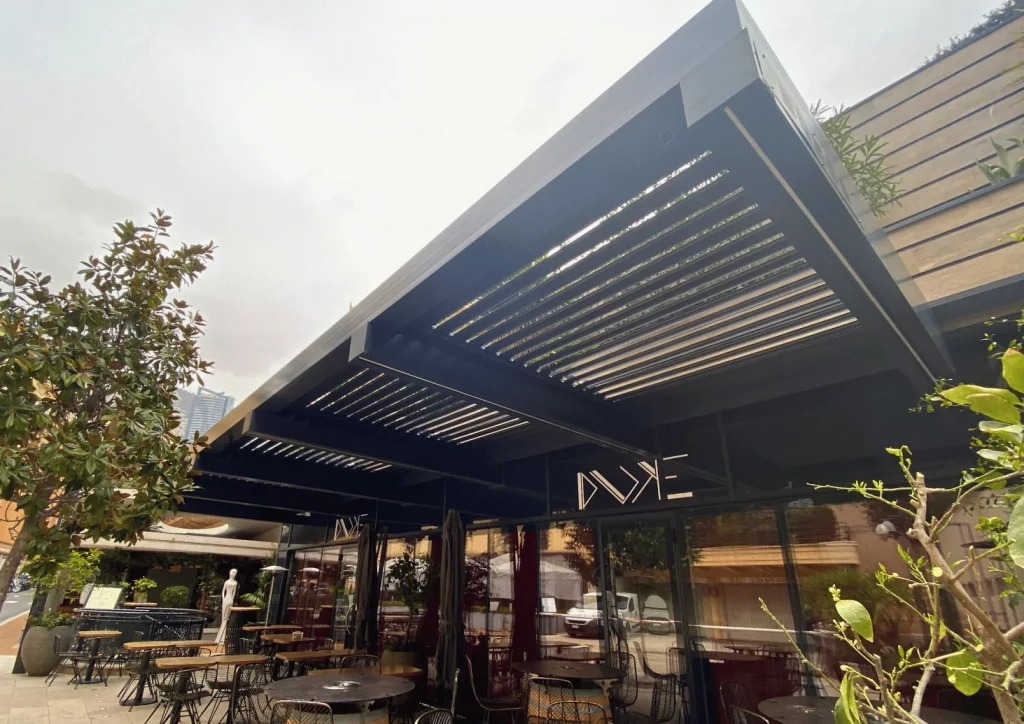
Side-by-side comparison: pergola vs bioclimatic pergola
To choose between a traditional pergola and a bioclimatic pergola, it helps to compare their technical and practical features. Here is a summary of the main differences:
| Feature | Traditional pergola | Bioclimatic pergola |
|---|---|---|
| Roof | Fixed (fabric, polycarbonate or solid panels) | Adjustable aluminium louvres |
| Light control | None: constant shade | Precise, adjustable throughout the day |
| Ventilation | Limited | Natural airflow when the louvres are partly open |
| Rain protection | Varies with the roof material | Watertight when the louvres are closed |
| Motorisation and sensors | Rarely available | Motorised louvres, rain and wind sensors, home automation |
| Maintenance | Depends on materials (fabric, timber) | Minimal (aluminium) |
| Year-round use | Mainly summer | All year round |
| Budget | More affordable | Higher investment |
This comparison highlights the technological and practical advances of the bioclimatic pergola, which meets growing expectations for comfort, flexibility and design, especially in exposed locations such as Monaco, Menton and Nice.
Advanced features of a bioclimatic pergola
A bioclimatic pergola stands out for a range of technical features designed to maximise thermal comfort and enjoyment all year round.
Adjustable louvres: smart light control
The louvres can rotate up to 140° or even 155°, allowing precise control of sunlight according to the time of day or season. In summer, they provide effective protection from direct sun; in winter, they let the light through for natural solar gain.
Controlled natural ventilation
When partly open, the louvres encourage natural airflow, preventing heat from building up under the structure. This passive ventilation is especially welcome in hot areas such as the French Riviera.
Weather protection
When fully closed, the louvres provide effective protection against rain. Some pergolas are even fitted with rain or wind sensors that close the louvres automatically in the event of a sudden downpour.
High-end customisation and comfort
The installation can be enhanced with bespoke options:
- Integrated LED lighting
- Side blinds or vertical screens
- Glass enclosures to create a semi-open space
- Home automation control systems
Thanks to its flexibility, a bioclimatic pergola can be used all year round. It can become an outdoor dining area, a lounge or a relaxation space, while blending seamlessly with the existing architecture.
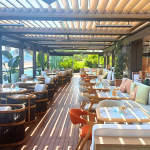
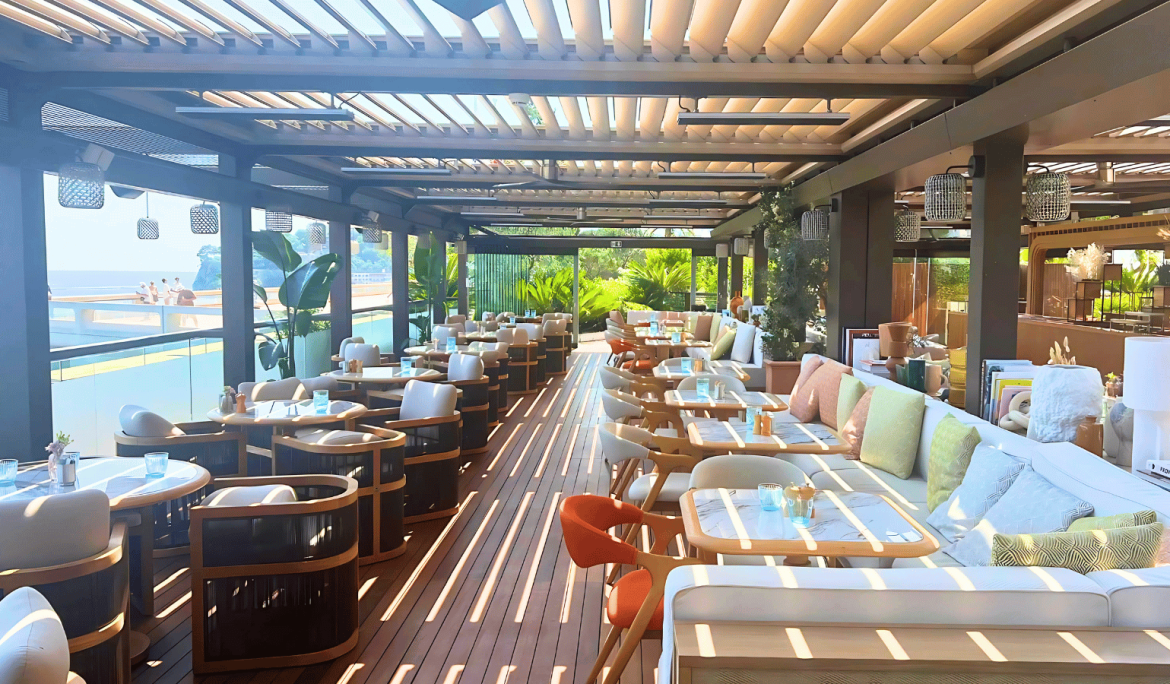
For an example of a high-end installation, take a look at our project for the bioclimatic pergolas on the rooftop of Amù restaurant at the Fairmont Monte Carlo, a Monaco Fenêtres project.
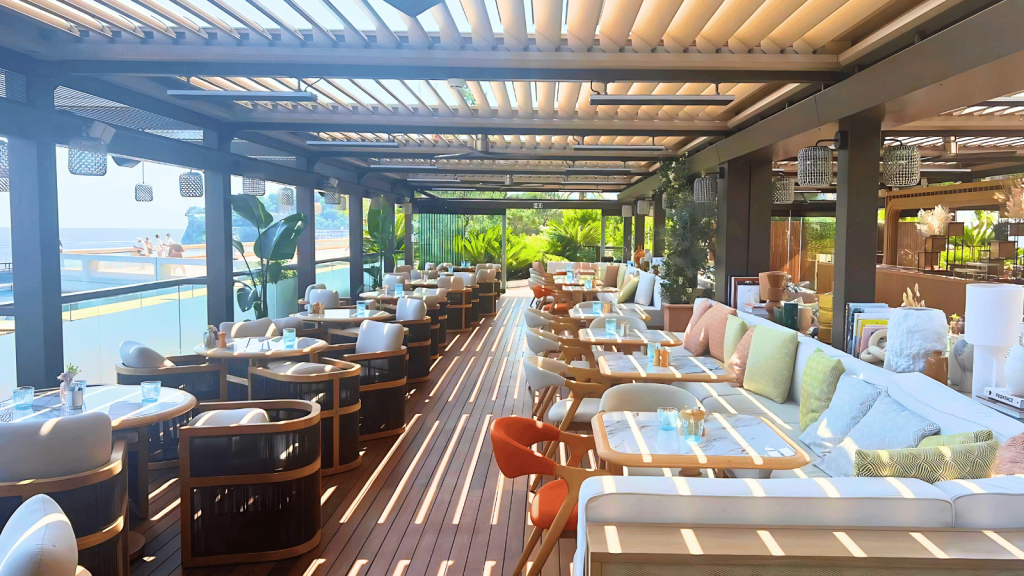
The real benefits of a bioclimatic pergola
A bioclimatic pergola does more than shelter an outdoor space: it completely transforms how you use it and the quality of life it brings. Here are the main advantages that make it an increasingly popular choice with discerning homeowners and businesses alike:
Optimal thermal comfort in every season
Thanks to its adjustable louvres, a bioclimatic pergola naturally regulates the temperature, limiting overheating in summer while retaining warmth in spring and autumn. It offers controlled, adjustable protection that responds perfectly to the whims of the Mediterranean climate.
Adapts to the weather
Whether the sun is at its peak or a sudden shower is on its way, the pergola adjusts in seconds. Partial opening for ventilation, full closure in the rain or carefully measured shade make it flexible for everyday use.
Greater protection from the elements
As well as sun and rain, the aluminium structure stands up perfectly to coastal winds, salt air and UV. It is an ideal choice for seafront homes in Monaco, Menton or Saint-Jean-Cap-Ferrat.
Enhances the look of your home
Clean design, quality finishes and contemporary lines: a bioclimatic pergola blends elegantly with every architectural style. It instantly adds a touch of modernity and sophistication to the façade, while preserving the harmony of the property.
Tailored to your property’s architecture
Every project can be made to measure, with options to suit your constraints and wishes: specific dimensions, colours, integrated lighting, glass side enclosures, home automation, and more. This level of customisation is a real advantage when creating a unique space. For technical details or to plan your project, discover our bioclimatic pergola installation service in Monaco and the Alpes-Maritimes.
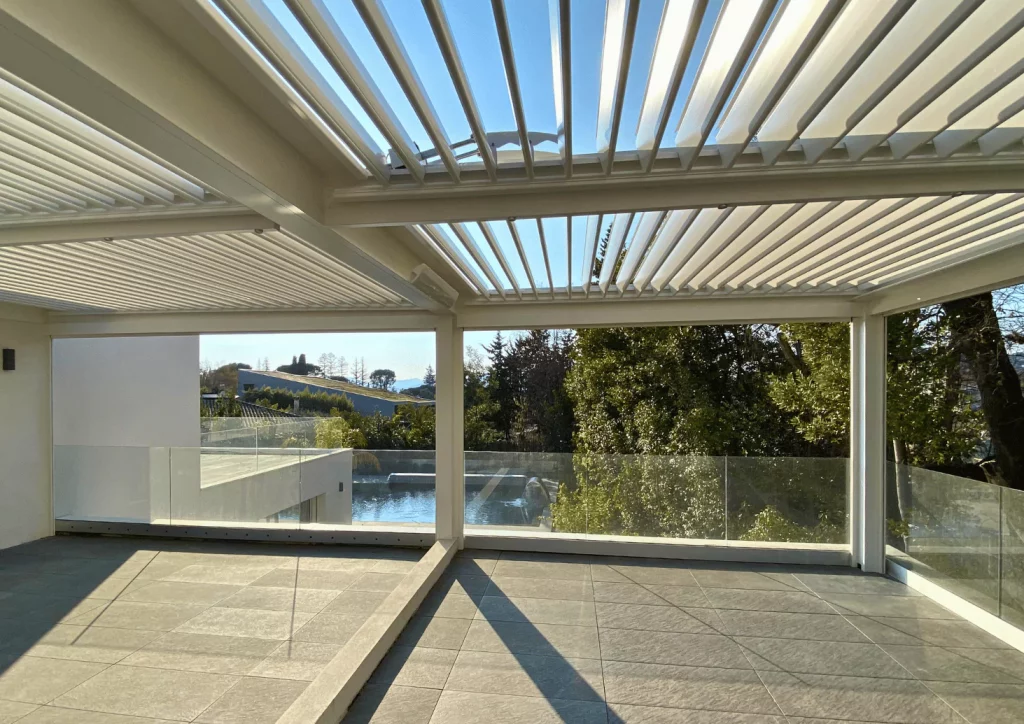
How to choose between the two
Choosing between a traditional pergola and a bioclimatic pergola depends on several practical, aesthetic and budget considerations. Here are a few pointers depending on your priorities:
1. How you will use it
- Occasional use (summer meals, occasional shade): a traditional pergola may be enough.
- Regular or daily use: a bioclimatic pergola is far more versatile, ideal for enjoying your terrace all year round.
2. Your budget
- A traditional pergola is a cost-effective solution, best suited to simple projects.
- A bioclimatic pergola requires a larger investment, justified by its technology, durability and comfort.
3. How exposed your space is
- If your terrace is highly exposed to sun, wind or rain, a bioclimatic pergola is the clear choice, as it adapts to changing weather conditions.
- For a more sheltered area, a fixed pergola may be sufficient.
4. Your design and flexibility requirements
- A bioclimatic pergola offers extensive customisation: colours, integrated lighting, glass enclosures, home automation, and more.
It is the perfect solution for high-end projects looking for flexibility and contemporary design.
Conclusion
The difference between a traditional pergola and a bioclimatic pergola is not just about looks, but above all about how it works and the level of comfort it offers.
- A traditional pergola means simplicity, seasonal effectiveness and a controlled budget.
- A bioclimatic pergola means innovation, thermal comfort, adaptability and added value for your home.
In a region like the French Riviera, where sunshine, heat and changeable weather go hand in hand, a bioclimatic pergola is the ideal solution for anyone who wants to make the most of their outdoor space, without compromise.
FAQ
1. What is the main difference between a traditional pergola and a bioclimatic pergola?
A traditional pergola has a fixed or retractable roof that cannot be adjusted. A bioclimatic pergola is fitted with adjustable louvres that control light, ventilation and rain protection, for optimal comfort in every season.
2. Is a bioclimatic pergola suitable for windy areas such as the French Riviera?
Yes, absolutely. Aluminium bioclimatic pergolas are resistant to sea winds and bad weather. They are particularly well suited to roof terraces, seafront gardens and exposed balconies in the South of France.
3. Can I add options (lighting, glass enclosures, etc.) to a bioclimatic pergola?
Yes. A bioclimatic pergola can be fully customised: integrated LED lighting, vertical blinds, glass enclosures, motorised or home automation systems. Every project can be configured to suit your needs and surroundings.
4. How much maintenance does a bioclimatic pergola need?
Very little. Thanks to its aluminium structure, a bioclimatic pergola requires minimal maintenance. Regular cleaning of the louvres and gutters is all it takes to keep it working well for years.
5. Can I see an example of a bioclimatic pergola project?
Of course. Monaco Fenêtres installed a bioclimatic pergola on the rooftop of Amù restaurant at the Fairmont Monte Carlo, with high-end finishes and bespoke equipment. View the project